Internalization
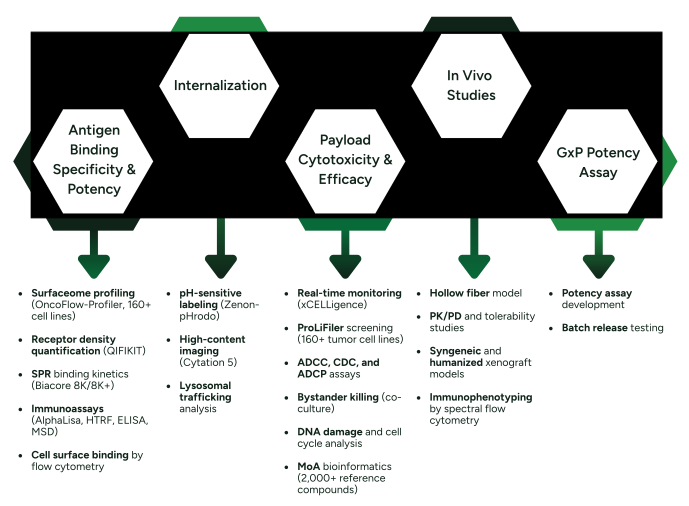
Efficient internalization is crucial for delivering the payload to its intracellular target. An ADC that binds but fails to internalize will never release its cytotoxic drug. We assess the internalization kinetics and intracellular trafficking of your ADC using flow cytometry and imaging platforms, providing the data needed to optimize your construct for therapeutic efficacy.
- Track internalization dynamics with pH-sensitive labeling (Zenon-pHrodo) monitored by flow cytometry (endpoint) and Cytation imaging (real-time)
- Visualize ADC localization with high-content imaging on Cytation 5, generating 160 data points per experiment with automated internalization scoring
- Profile lysosomal trafficking in real time across multiple cell lines and timepoints to confirm payload delivery to the intended intracellular compartment
Payload Cytotoxicity Profiling
Once internalized, the payload must retain its cytotoxic activity and exhibit an acceptable safety profile. Our platforms allow you to rigorously evaluate ADC potency, mechanism of action, selectivity, and off-target toxicity to de-risk your program before advancing to in vivo studies.
- Monitor real-time cytotoxicity continuously over 7 days with xCELLigence impedance measurement
- Assess cancer cell proliferation after ADC and payload treatment using our catalog of over 300 individual cancer cell lines
- Evaluate ADC and payload potency across 160+ tumor types with our ProLiFiler cancer cell panel screening service
- Compare ADC activity in 3D vs. 2D settings with our 3D ProLiFiler featuring 40 cancer spheroid lines
- Identify method of cell killing with ADCC, CDC, and ADCP assays
- Evaluate bystander killing using co-culture systems with luciferase reporter cells
- Assess off-target toxicity in primary cells including bone marrow
- Test for DNA damage with ATM phosphorylation and y-H2AX foci formation assays
- Profile mechanism of action with cell cycle analysis and comparison to 2,000+ reference compounds
Contact Us